


A Course Correction lever is a part of the business that you can move to change the business’s performance.
The Course Correction Canvas shows the company’s eight most impactful levers, arranged in descending priority.
Each lever is read through four lines:
CET — Competitive Expectation Threshold, the point where buyers begin to see credibility on that lever.
MSC — Maximum Structural Capability, the point where the company starts running into its own executional and operational resistance. It marks the level the business can realistically support without straining delivery, credibility, complexity, or follow-through.
Current — where the business is now.
Future — where the business needs to go.
With the CCC, an executive can understand:
Insight — where the business is exposed, where it is strong, and which gaps matter most right now.
Shift — move resources away from broad improvement and toward the few levers that change market position.
Action — protect strengths, close the most important gaps, and gain the greatest impact with company resources.
Example 1: Speaking Capability When Buyers Need Credibility
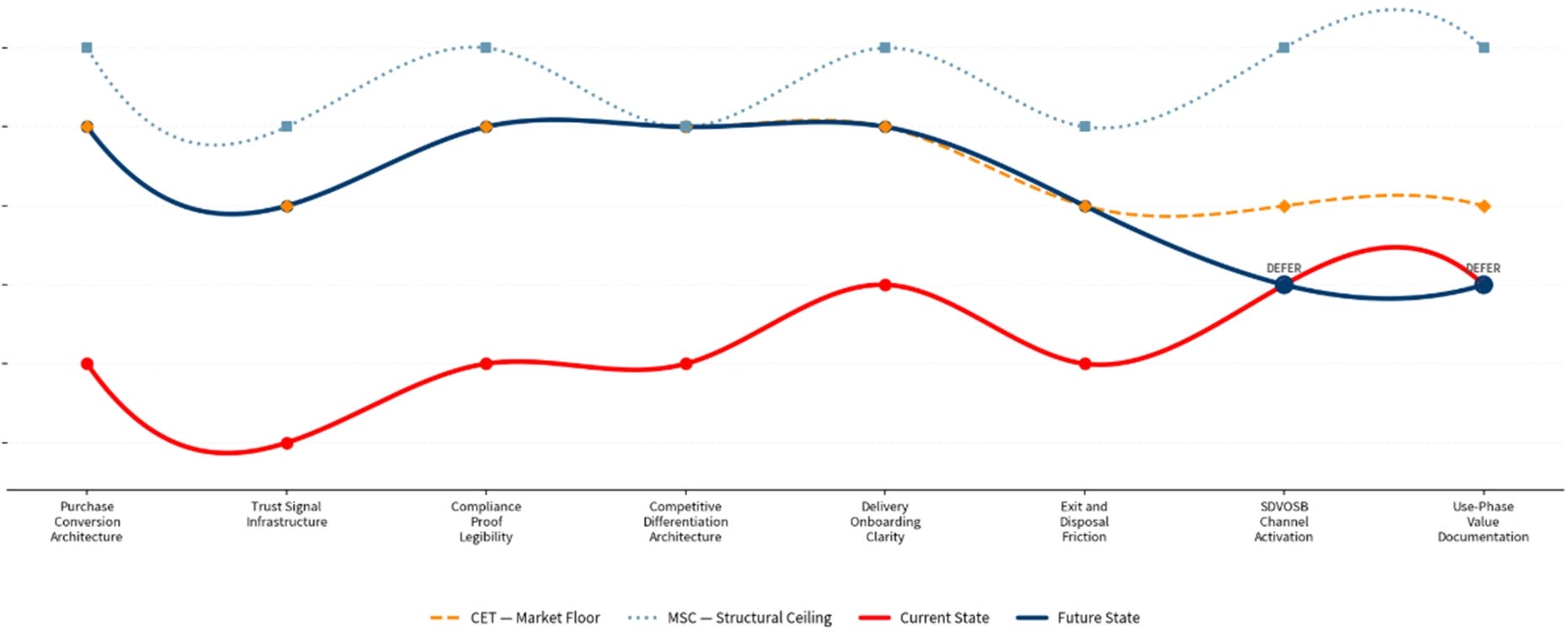
This company is an MSSP focused on the mid-market.
Problem — Buyers cannot confidently evaluate the offer.
Insight — The biggest gaps sit in conversion, trust, and compliance proof.
Shift — make the first buyer conversation easier to trust, easier to evaluate, and easier to advance.
Action —
Clarified purchase and pricing options and made them more visible in buyer-facing materials.
Outlined the buyer path from demo through onboarding and exit, so buyers could see the plan in advance.
Brought outcome data, compliance proof, and prior customer proof points forward in the evaluation process.
Example 2: Strong Core, Rough Path to Yes
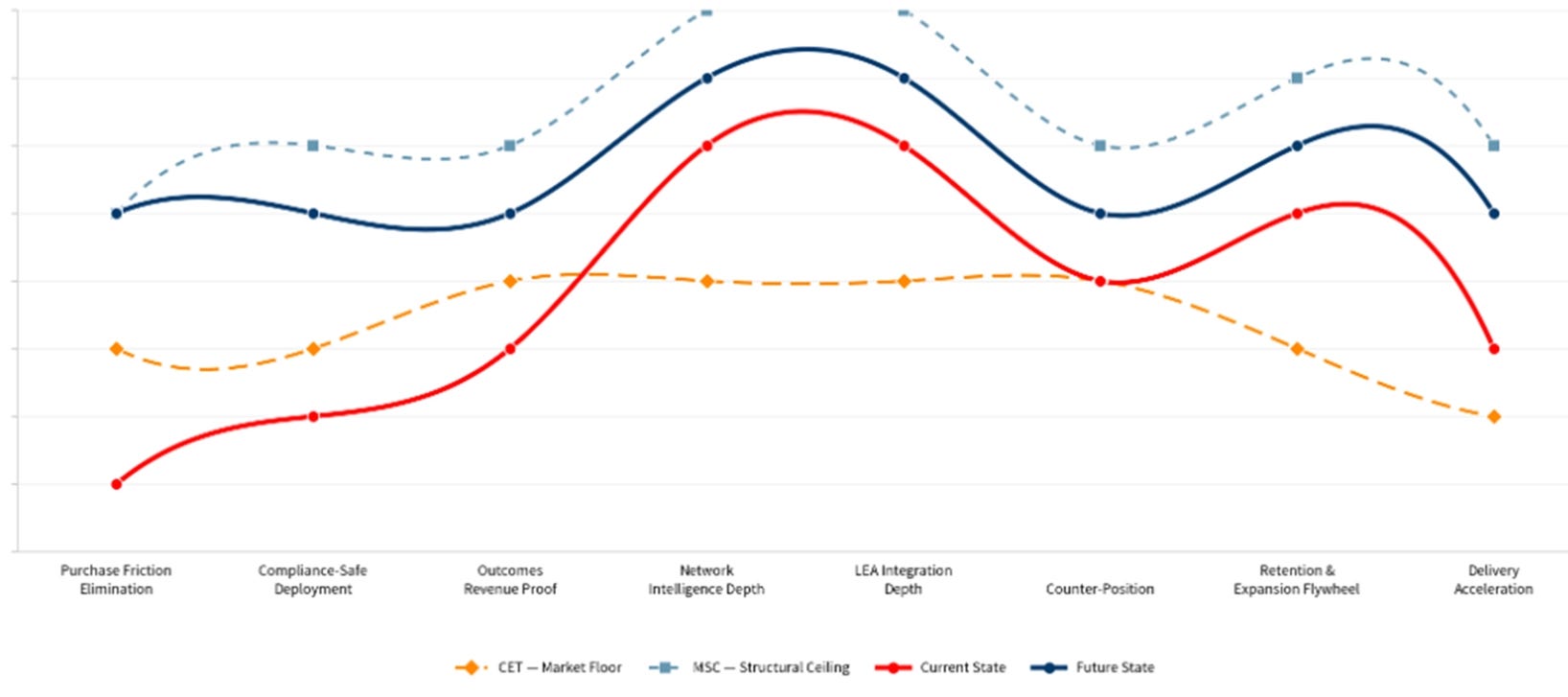
This company is a physical security threat-intelligence platform.
Problem — Buyers hesitate before they can safely justify the move.
Insight — The core strength is already there. The friction sits in buying, deployment, and proof.
Shift — Concentrate commercial resources on making the offer easier to buy, safer to deploy, and easier to justify.
Action —
Qualify integration, legal, and compliance requirements early in the buying process.
Show deployment steps, approvals, and safety checks before the deal reaches procurement.
Put quantified outcome evidence in front of buyers earlier so the business case is built before final approval.
Document setup steps, owners, and time-to-value during evaluation, not after signature.
Make the product approach clear so buyers can see why it is easier to buy, safer to deploy, and easier to justify.
The Course Correction Canvas shows which levers matter now, how far they need to move, and what the business should stop treating as equally urgent.